
This year, the UI GreenMetric World University Rankings, which was first compiled in 2010 at the initiative of Universitas Indonesia, has again ranked the world’s universities and their campuses on the basis of sustainability and environmental indicators.
The UI GreenMetric evaluates universities on six main criteria. These are:
- setting and infrastructure (e.g. the amount of green space at the university or campus),
- energy and climate change (energy efficiency, use of renewable energy sources),
- waste management,
- water usage,
- transportation (green transport available on campus),
- education and research (courses, research, publication related to sustainability).
[kiemelt]The University of Pécs has been named the greenest Hungarian university for the third year in a row, having been ranked 21st in this year’s global ranking, up from 42nd last year and 59th in 2020.[/kiemelt]
In addition to PTE, one other Hungarian university made the top 100, with the University of Szeged (SZTE) ranking 73rd. In addition to PTE and SZTE, nine other domestic universities are also ranked.
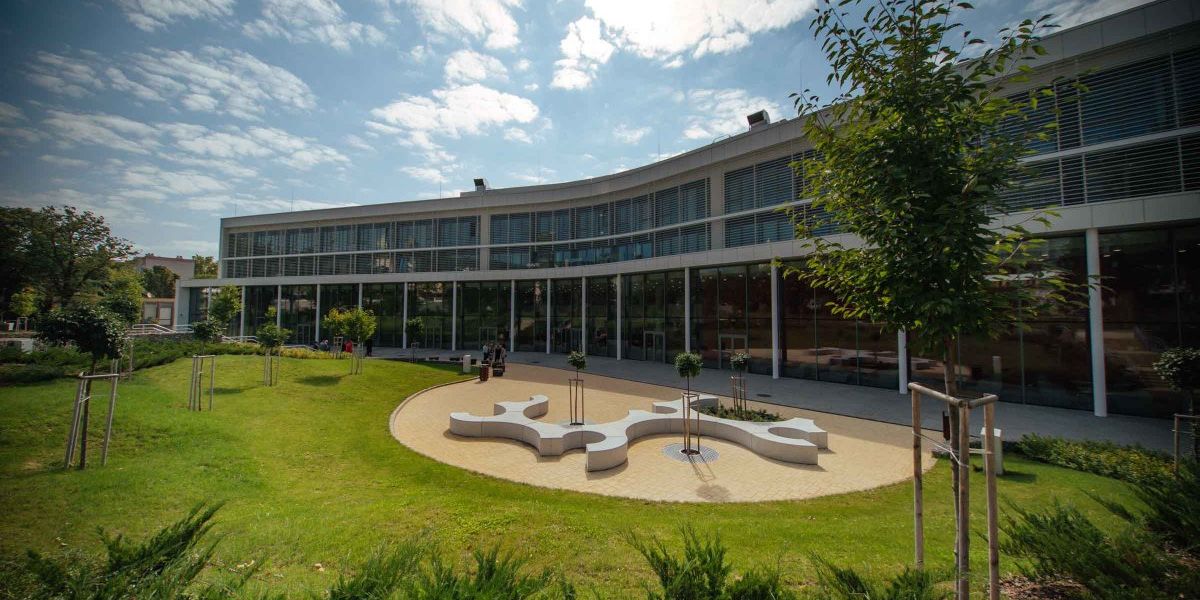
PTE’s new medical school building. PTE has been ranked the greenest university in Hungary for the third time this year (Photo: univpecs.com)
Placement of Hungarian universities in the UI GreenMetric World University Rankings:
- University of Pécs: 21.
- University of Szeged: 73.
- University of Sopron: 206.
- Eötvös Loránd University: 229.
- University of Debrecen: 266.
- Semmelweis University: 398.
- University of Pannonia: 519.
- Budapest Business School: 541.
- Corvinus University of Budapest: 577.
- University of Miskolc: 761.
- Budapest Metropolitan University: 863.
Corvinus has been named the most sustainably improved university in the world
Corvinus, ranked 9th in the ranking of Hungarian universities, has also achieved a major success by being named the most sustainably improved university in the world by UI GreenMetric.
[kiemelt]Corvinus entered the ranking for the second time this year and improved almost 300 places from last year’s ranking (869th to 577th), the biggest improvement in the world in 2022.[/kiemelt]
(Last year’s most sustainable university award went to Tilburg University in the Netherlands.)
The University’s Ménesi campus, due to open next autumn, is the first higher education investment in Hungary to meet the stringent sustainability certification Leed Gold criteria and the AA+ rating for outstanding energy efficiency – Corvinus said in a press release.
The institution has launched the Corvinus Green programme, which
- pays special attention to energy efficiency in operations,
- optimises the utilisation of buildings to reduce overheads,
- encourages staff to use jugs instead of plastic bottles on a voluntary basis,
- collects unused kitchen and office electrical equipment,
- and encourages the use of local lighting instead of general lighting where it is reasonable to do so.
Three domestic universities have been included in the QS sustainability ranking
In early November, we reported on the performance of Hungarian universities in another global sustainability ranking. In the list compiled for the first time this year by the London-based analytical firm Quacquarelli Symonds (QS), the Budapest University of Technology and Economics (BME) was the best-ranked Hungarian university.
BME is ranked 341-360th in the list of 700 universities from around the world, which has examined sustainability from environmental and social perspectives. In environmental impact category, BME is ranked in the top 200 universities. The University of Szeged and ELTE are the other two Hungarian institutions which were included in the ranking alongside BME.


