BME Archívum | Diplomátszerzek

BME’s new small satellite will be carried out into outer space by Elon Musk’s rocket

The small satellite with a size of 5x5x15 centimetres was built by teachers, researchers and students of the BME Department of Broadband Communications and Electrical Engineering in a three-year joint work. Its name MRC-100 was given in honour of the University Radio Club (Műegyetemi Rádió Club), which will be 100 years old in 2024.

The small satellite will study the electrosmog around the Earth

The new spacecraft, which will study electrosmog around the Earth, has a position stabilisation system in addition to the sub-units ensuring the correct operation and the equipment responsible for testing the electrosmog.

In addition to independent experiments carried out at three other universities—the University of Szeged, the Széchenyi István University in Győr and the University of Debrecen—, the measuring instruments of H-Ion and 27G Ltds will also be sent into space on board of the small satellite – BME said in a press release.
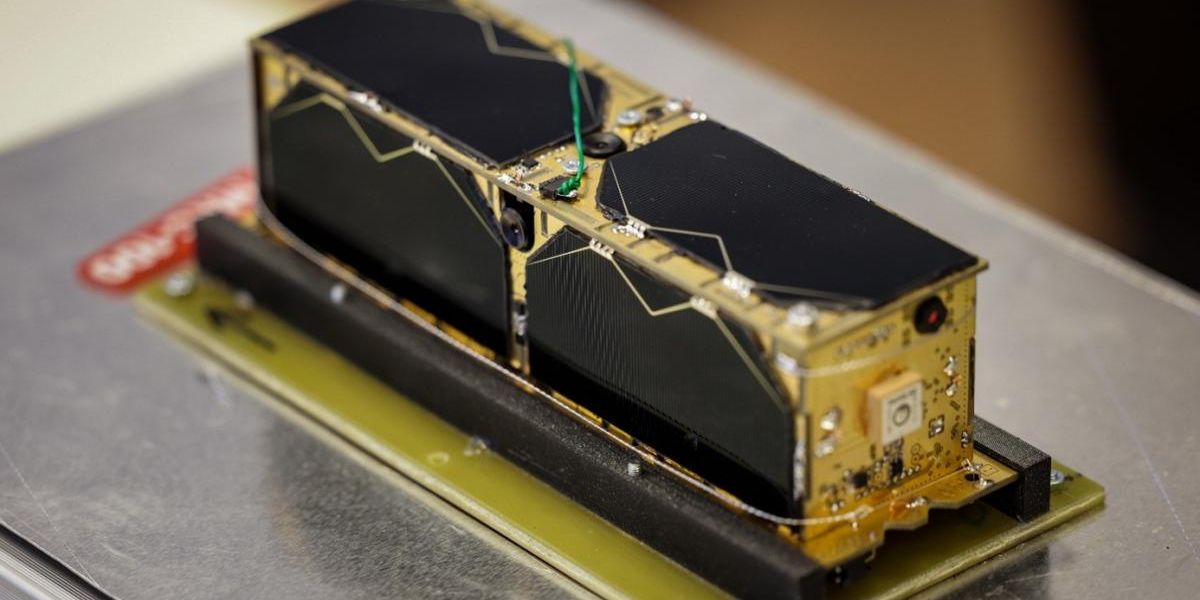
The small satellite with a size of 5x5x15 centimetres was built by teachers, researchers and students of BME in a three-year joint work.(Photo: BME)

The launching costs were covered by the American ARDC (Amateur Radio Digital Communications) foundation. The condition of the grant was that the MRC-100 study the electrosmog around the Earth in a wide frequency range.

The most significant Hungarian supporters of the project were the National Media and Infocommunications Authority and the Ministry of Foreign Affairs and Trade.

Falcon-9 rocket will carry the small satellite into outer space

[kiemelt]The satellite is expected to be launched into outer space in May from the United States by a Falcon-9 rocket developed by SpaceX, the space company of Elon Musk, American business magnate.[/kiemelt]

MTI also reports that the MRC-100 is the fifth and largest satellite in the SMOG series, launched in 2013 and developed at BME. As part of the project, the SMOG-P pocket satellite was launched in December 2019 and completed its mission at the end of September 2020. Based on the measurement results, the first electromagnetic pollution map was created, which showed the electromagnetic effect of digital terrestrial TV broadcasting.

About a month ago, we reported that a rocket development team of engineering candidates from BME has been ranked in the top 10 in Europe’s most prestigious university rocket launch competition.

Such a training programme has never been launched in Hungary

The launch of the training is justified by the fact that a large number of technology-intensive R&D companies in Hungary and abroad are looking for professionals with natural science and engineering skills who can engage in creative R&D tasks, the BME said.

BME predicts that physics and engineering graduates will immediately get a job after leaving the university. In its press release about the launch of the new training, the university mentions several large companies (Bosch, Semilab, 77 Elektronika, Femtonics, Furukawa Electric, Magnetec) where physics engineering students can start their careers as interns during their training.

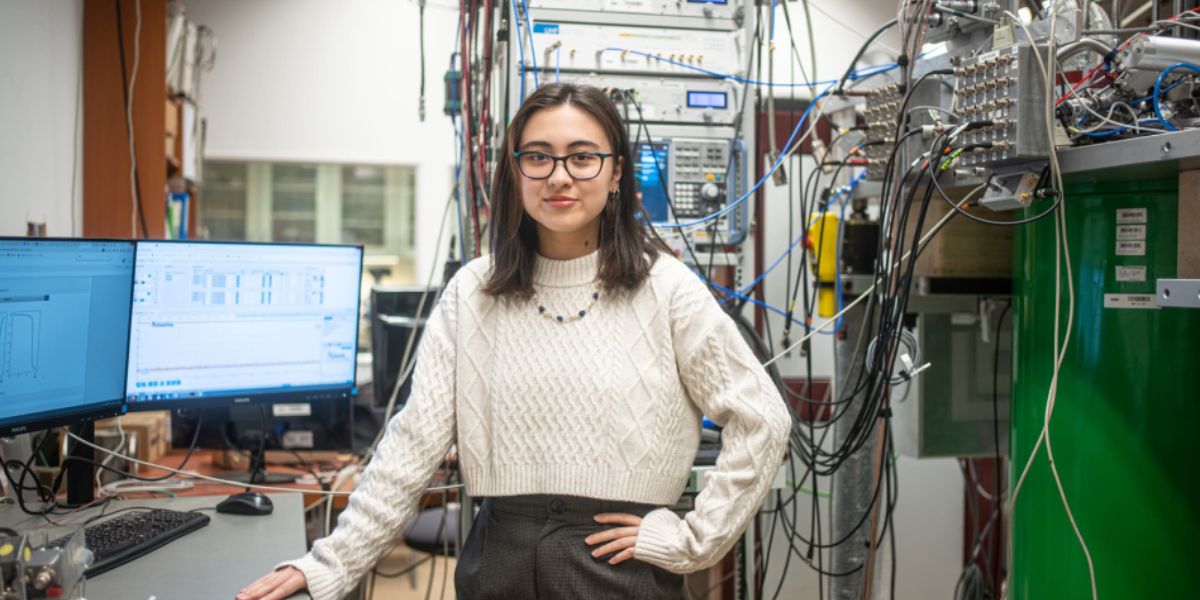
BME predicts that physics and engineering graduates will immediately get a job after leaving the university (Photo: BME)

The new bachelor training programme will focus on these areas:

  • Semiconductor technology
  • Sustainable Energy
  • Data Science
  • Nanotechnology
  • Materials Science
  • Medical devices
  • Artificial Intelligence
  • Quantum technology
  • Nuclear technology
  • Optics and photonics
  • Computer modelling

Market-oriented specialisations will be available in the following areas:

  • Nanotechnology and quantum applications
  • Nuclear technologies and sustainable energy
  • Natural sciences data analysis

We recently reported that BME became the best Hungarian university in the field of employer reputation in this year’s Quacquarelli Symonds (QS) World Higher Education Ranking. 

Three Hungarian universities are included in the QS sustainability ranking

Quacquarelli Symonds (QS), the London-based higher education ratings company has published its first sustainability rankings, the QS World University Rankings: Sustainability 2023. It examined the universities’ sustainability performance from environmental and social perspective, based on a total of eight indicators (three environmental and five social).

The universities’ performance was assessed on the basis of eight indicators

As for environmental sustainability, the following three indicators were evaluated:

  • sustainable institution (This indicator considers, among other things, whether a university holds membership in officially-recognised climate action or sustainability groups, has a publicly available sustainability and energy emissions report and a published commitment to achieving net zero emissions.)
  • sustainable education (alumni outcomes and academic reputation within earth, marine and environmental sciences courses, and the availability of courses that embed climate science and/or sustainability within the curriculum)
  • sustainable research (research activity around the United Nation’s Sustainable Development Goals.)

Three indicators were evaluated in environmental impact category (Photo: pexels)

Five indicators considered in relation to the social dimension of sustainability:

  • equality (This indicator assesses institutions on a variety of measures including the proportion of female students, the availability of diversity and inclusion policy, and the disability support available.)
  • knowledge exchange (commitment to knowledge transfer in collaboration with less-economically-supported institutions, and a university’s inclination to partner with other institutions.)
  • impact of education (university’s research into quality education, alumni impact and academic reputation in relevant social subjects)
  • employability and opportunities (an employer reputation score and an employment outcomes score based on how prepared students are for successful careers)
  • quality of life (commitment to wellbeing within and outside of the university; health options on campus, for example.)

Three Hungarian universities were included in the list of 700 universities from around the world. The Budapest University of Technology and Economics (BME) achieved the best position (341-360th). The other two Hungarian universities on the list were the University of Szeged (SZTE) (381-400th) and Eötvös Loránd University (ELTE) (601+).

BME in the top 200 in environmental impact category

Two separate rankings were produced based on the environmental and social aspects of sustainability. In environmental impact category, BME was ranked 198th, SZTE 360th and ELTE 501+. In social impact category, all three Hungarian universities were ranked 501+.

BME was ranked as the best Hungarian university in four of the eight indicators. In addition to the three environmental indicators, BME also scored best in a social indicator (employability and opportunities). SZTE was also ranked as the best Hungarian university in four indicators (equality, knowledge exchange, impact of education and quality of life).

We have recently reported that the University of Szeged achieved the best position (551-560th) among Hungarian universities in the QS overall university ranking, which evaluates universities on six criteria (academic reputation, employer reputation, faculty/student ratio, citations per faculty, international student ratio, international faculty ratio).

Learn languages at the university!

At the Budapest University of Technology and Economics (BME), students can sign up to 0-credit language courses in the Neptun system. These are free during two semesters, after which a fee is charged for the courses. At present, BME offers eight languages: English, French, Spanish, Dutch, Japanese, German, Italian and Russian.

At Corvinus University of Budapest, you can choose courses in nine languages, some of which are accessible free of charge in Neptun, while others are offered as fee-paying.

At Budapest Metropolitan University, language courses are available with a credit value, and you have to pay for the credits. Courses are offered in 12 languages: Arabic, Chinese, English, French, German, Greek, Italian, Japanese, Portuguese, Russian, Spanish and Swedish. Metropolitan also offers various language courses, such as refresher, professional proficiency, and language exam preparatory courses.

Károli Gáspár University organises courses in 13 languages at all levels, and offers general and specialist courses in English and German, according to the different degree programmes.

A diversity of language tuition at university level also exists outside the capital. For instance, students at the University of Szeged can choose between seven languages, including Latin, and can sign up to 16 units free of charge.